
There is a version of global marketing strategy that treats markets as variations on a theme. The framework travels. The audience adapts. The creative gets localised. The underlying logic stays the same.
I believed something close to this before I moved to the UK.
A year of living here, studying here, and watching how British consumers relate to brands has revised that belief substantially. Not because the UK is uniquely complicated, every market is complicated in its own way but because the gap between the global playbook and what actually works here is wider and more specific than I expected.
The central thing I've observed, and which my research at the University of Leeds has helped me articulate properly, is this: UK consumers are more brand-sceptical than most global marketing frameworks assume. And that scepticism is not a communication problem to be solved with better messaging. It's a structural feature of the market that the best British brands treat as a design constraint.
The Scepticism Is Baked In
YouGov's brand tracking data consistently shows that UK consumers rank among the most sceptical audiences globally when it comes to advertising claims. Ipsos research on trust in institutions including commercial brands shows the UK sitting notably lower than comparable European markets on measures of corporate trust.
This isn't new. The British cultural relationship with commercial enthusiasm is long-standing. There's an instinctive suspicion of the hard sell, a preference for understatement, a distrust of brands that try too hard. These aren't stereotypes, they show up reliably in consumer research and in the spending behaviour that follows sentiment.
What's interesting is how this plays out in practice. A brand can have high awareness and low trust simultaneously in this market in a way that's less common elsewhere. People know who you are. They're not sure they believe you. That gap between recognition and credibility is where most global marketing playbooks underperform.
What Global Playbooks Get Wrong
The default global approach to building brand trust is to demonstrate it: show testimonials, cite statistics, list credentials, make the claim loudly and consistently enough that it becomes familiar. Familiarity, in many markets, converts into trust reasonably reliably.
In the UK, this approach often backfires. The louder the claim, the more suspicious the response. A brand that arrives telling you how trustworthy it is has, in the British consumer's mental model, already given you reason to doubt it.
This isn't irrational, it's actually quite sophisticated. It reflects a cultural heuristic that entities which need to assert their credibility probably haven't earned it yet. The brands that are genuinely trusted here tend not to talk about trust at all. They demonstrate it through behaviour, through consistency, through what they do when things go wrong, and through a kind of earned familiarity that takes time.
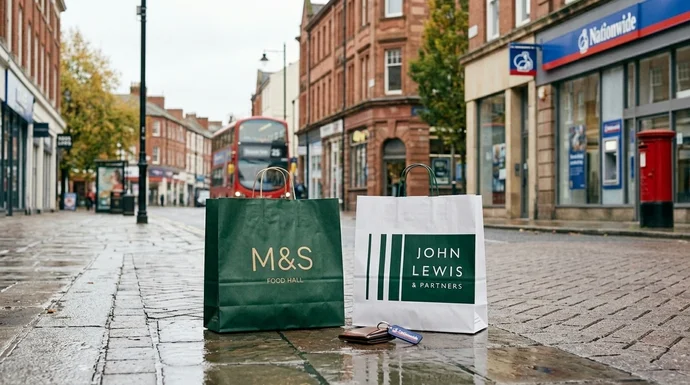
Marks and Spencer don’t tell you it's trustworthy. John Lewis doesn't claim to be on your side. Nationwide's recent advertising with its deliberate rejection of celebrity, its commitment to unglamorous consistency is one of the most interesting examples of a brand that has understood this principle and built a campaign architecture around it. The whole idea is: we do what we say we'll do, and we've been doing it for a long time. That's the trust argument. It's made by implication, not declaration.
The Search Signal That Confirms This
One of the things that makes marketing in the digital age interesting is that search behaviour gives you an unusually honest window into how consumers actually think, not how they say they think in a survey, but what they type when they're alone with a search bar and a decision to make.
In the UK market, high-intent searches in almost every category show a distinctive pattern: consumers are interrogating brands before they convert. 'Is [brand] legitimate?' '[Brand] reviews are they genuine?' '[Brand] complaints.' This is not unique to the UK, but the volume and the specificity of these trust-verification searches is notably higher here than in comparable US market data.
What this means strategically is that the pre-purchase research journey in the UK is longer and more adversarial. Consumers are not looking for reasons to buy. They're looking for reasons not to be fooled. A marketing strategy that treats the consideration phase as an opportunity to push harder is misreading the signal. The consideration phase here requires a different kind of content; not more persuasion, but more evidence.
Three Things UK-Winning Brands Do Differently
Based on what I've observed, what the data shows, and what my academic work in consumer behaviour has helped me frame:
They let customers do the talking but selectively.
User-generated content and genuine customer reviews carry more weight in this market than brand-produced content, almost without exception. But the selection matters. Cherry-picked five-star reviews have become easy to identify and are treated accordingly. The brands that build credibility here lean into their three-star reviews, they respond to them, they learn from them visibly, they don't hide them. That willingness to be seen being imperfect is, counterintuitively, one of the most trust-building signals available.
They invest in consistency over campaign.
The UK market rewards brands that are recognisable over time more than brands that make noise in the moment. The Advertising Association's data on long-term brand building consistently shows a stronger multiplier effect for consistent investment over time versus burst campaigns; a pattern that holds more strongly in the UK than in other markets they track. This has direct implications for how marketing budgets should be allocated and how success should be measured.
They treat transparency as a strategic asset, not a compliance obligation.
The brands gaining ground in UK markets, particularly with younger demographics are the ones that are visibly honest about how they operate. Not just what they sell, but how they make it, who makes it, what they get wrong, and what they're doing about it. This goes beyond sustainability credentials or purpose-driven marketing, both of which the UK consumer has become increasingly allergic to when they feel performative. It's about structural honesty; being the kind of brand that earns trust by making trust easy to verify.
What This Means for Strategy
The implications are practical rather than philosophical.
If you're entering the UK market with a global playbook, the first thing to interrogate is your trust architecture. Not your messaging, your behaviour. What does a UK consumer find when they look for reasons not to trust you? That search journey is as important as your top-of-funnel campaign.
If you're an established UK brand struggling with the gap between awareness and conversion, the answer is probably not a new campaign. It's a more honest look at the signals your brand is sending at the consideration stage; your reviews, your responses to complaints, your content at the moment of decision.
And if you're a marketing professional building strategy for UK audiences, the most important habit you can develop is treating scepticism as a given. Not an obstacle to overcome, but a constraint to design within. Some of the most effective marketing in this market is effective precisely because it doesn't try too hard.
The UK rewards brands that understand the difference between being known and being believed. Getting that distinction right is not a creative problem. It's a strategic one.